7 February 2015

The Russian Military Will Receive 200 New Aircraft in 2015

By Franz-Stefan Gady
February 06, 2015

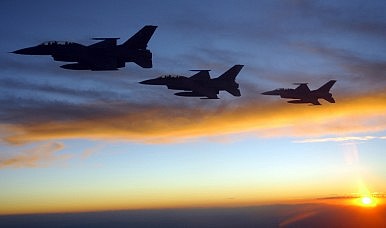
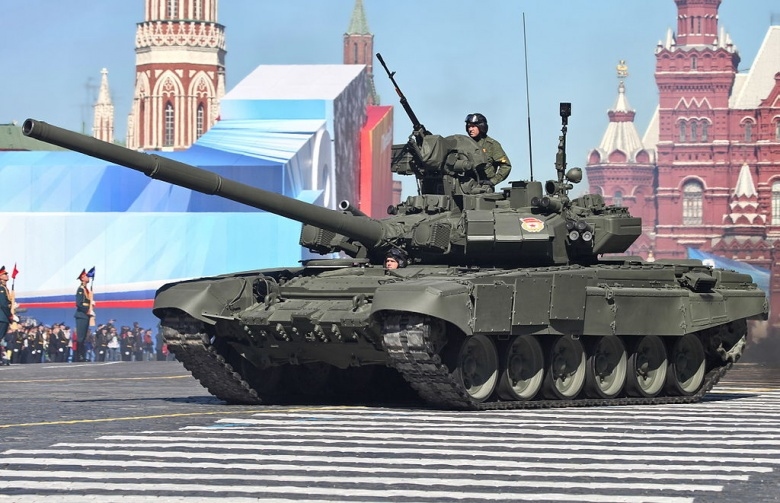
During a conference call on February 3, Russian Minister of Defense Sergei Shoigu announced that the Russian Air Force and Naval Aviation, the air branch of the Russian Navy, will receive more than 200 new aircraft in 2015. Already in 2014, the Russian military received 250 new planes and helicopters – including new Su-34 bombers, Su-35 fighter jets and Mi-28 helicopter gunships. This is all part of a massive military expansion and modernization plan which between 2011 and 2020 is budgeted to cost the Kremlin up to 20 trillion rubles.

“Under the framework of Defense Procurement and Acquisition program, the Air Force and Naval Aviation will receive 126 new military aircrafts and 88 helicopters. And long-range aviation serviceability rates will be set for 80 percent,” the Russian defense minister announced on Tuesday. He further underlined that the Russian Air Force’s “equipment with modern weapons will increase to 33 percent, while the serviceability status [will increase] up to 67 percent,” which means that two out three aircraft will be operational at any given time.

Back in December 2014, Russian military authorities were talking about receiving 150 new aircraft in the new year, citing the state defense order for 2015. This order has now apparently been updated. The 2015 state defense order includes Sukhoi Su-34 bombers, multipurpose Su-30SM Su-35S fighter jets, Yakovlev Yak-130 advanced trainers/light fighters and Ilyushin Il-76MD-90 transport planes. According to Sputnik News, the Russian military’s rotary wings will receive Kamov Ka-52 and Mil Mi-28N attack helicopters, Mi-8AMTSh assault-transport helicopters, Mi-35 combat helicopters, and Ka-226 utility choppers.

“Pivot 2.0”

By Michael J. Green, Nicholas Szechenyi, Victor Cha
JAN 5, 2015 
http://csis.org/publication/pivot-20

How the Administration and Congress Can Work Together to Sustain American Engagement in Asia to 2016 

Opinion surveys demonstrate that a majority of Americans consider Asia the most important region to U.S. interests, and a majority of Asia experts support the Obama administration’s goal of a “pivot” or “rebalance” to the Asia-Pacific region. Yet doubts have also grown about whether the pivot can be sustained by a president politically weakened by the 2014 midterm results, constrained by budget sequestration, and pulled into crises from Ukraine to Iraq and Iran. On issues from immigration to Cuba policy, the Obama administration and the incoming Republican Congress appear set for confrontation. Yet Asia policy remains largely bipartisan—perhaps the most bipartisan foreign policy issue in Washington. It is therefore critical—and practical—to ask that the White House and the Republican leadership in the Congress chart a common course on policy toward Asia for the next two years. This report outlines concrete areas for action on trade, China, defense, Korea, India, and Southeast Asia. 

To Stay Focused, Manage Your Emotions

Ed Batista
FEBRUARY 2, 2015

A leader’s most precious resource is not their time. It’s their focused attention. Time merely passes, while focused attention makes things happen. When we’re able to gather and direct our attention toward a particular task or interaction, we can have a significant impact in a minimal amount of time. But when we’re unable to bring our attention to bear on the work at hand, all the time in the world is insufficient. So what are the implications of this for leaders?

Leaders must recognize that it’s essential to work at enhancing their ability to direct their attention and minimize unhelpful distractions, and one of the most important steps in this process is managing emotions. Psychologist Victor Johnston describes emotions as “discriminant hedonic amplifiers,” meaning that they boost various signals in our mental landscape, drawing our attention toward certain issues and events and away from others. In other words, emotions are attention magnets.

Consequently, awareness and regulation of our emotions are central to the productive use of our attention. Here are some practical steps leaders can take.

Build Capacity. We can expand our attentive capacity through a commitment to practices such as meditation, journaling, time in nature, regular physical activity, and good sleep hygiene. All of these activities support our ability to direct our focus, filter out distractions, and manage our emotions, and we can often realize their benefits with a modest investment of time. Recent research indicates that meditating for just a few minutes a day, spending just one hour a week in nature, or jotting down a few reflective notes in the evening has a noticeable impact on well-being. My experience as a coach suggests that these benefits extend to leaders’ effectiveness. The key is a consistent commitment to each daily or weekly practice.

While these activities are often enjoyable in themselves, they aren’t indulgences–they’reinvestments in our ability to operate at peak effectiveness. High-performing professionals often enjoy success early in their careers by virtue of their ability to forego activities like this–they cut back on sleep or go without exercise for extended periods of time. But while those sacrifices temporarily expand our capacity for throughput, they actually diminish our capacity for focused attention. And while more senior leaders like my clients continue to work hard, what allows them to add value isn’t the extra hours spent working, but rather the quality of their focused attention while they’re at work.

Privacy, Security, and the Internet of Things

By Denise E. Zheng
FEB 2, 2015

According to the Federal Trade Commission (FTC), the Internet of Things (IoT) is currently composed of 25 billion connected devices around the world and the number will double to 50 billion within the next five years. These devices collect vast amounts of information on industrial and business processes and human health, behavior, and preferences that can be leveraged to improve delivery of products and services, health, and safety.

IoT will bring significant societal benefits; but without guidance, it could also bring undesired side effects. To date, the security and privacy of IoT is largely achieved through market preferences and industry self-regulation. But governments are increasingly scrutinizing the privacy and security risks associated with the Internet of Things.

The Federal Trade Commission (FTC) recently issued a staff report on the Internet of Things, urging companies to adopt data security best practices, minimize the collection and retention of consumer data, and to provide notice and choice to users. Recognizing the enormous potential for innovation in IoT, the report stated that IoT-specific legislation could stifle innovation at this stage and would therefore be premature. Instead, the FTC provocatively advocated for new, broad-based legislation that would expand the FTC’s enforcement authority to regulate companies broadly for consumer privacy, as well as the functionality of the devices and services they produce.

Critics of the report say that the FTC is rushing to conclusions about how to secure IoT devices, particularly on the issues of data minimization and the need for legislation. These critics are likely overreacting.

The report highlighted issues that the FTC plans to monitor. It does not expand the FTC’s enforcement authority. Nudging companies to adopt improved security best practices through non-regulatory means is a good thing, and it is much needed. The report was also carefully scoped to include consumer-facing IoT devices, and makes clear that business-to-business and machine-to-machine devices are outside the scope of the report.

BREAKING DISCIPLINE AND CLOSING GAPS? — THE STATE OF INTERNATIONAL RELATIONS EDUCATION

Francis J. Gavin
February 5, 2015

Over 20 years ago, esteemed political scientist Alexander George published “Bridging the Gap: Theory and Practice in Foreign Policy,” which identified a growing divide between academics and policymakers interested in foreign policy and international affairs. George argued that decision-makers took less advantage of international relations scholarship than they should, while scholars were producing work that was less useful to the world of practice. In the years since, both communities expressed a desire to close the gulf. As commentators from Nicholas Kristof to Joseph Nye to Robert Gallucci have pointed out, however, many believe the gap has widened in the years since George’s book first appeared.

Are they right? Many academics strenuously disagree, offering examples when their research influenced policies. Others argue that decision-makers should make more of an effort to access international relations scholarships. Still others contend that scholars, particularly political scientists, are producing work that is less focused on real world problemsand more oriented toward abstract theory and methodological sophistication. War on the Rocks has actively contributed to this important debate, and is an ideal forum for continued discussion.

In the past, I have argued that much could be done to improve both the relevance and accessibility of international relations scholarship, and that both communities could do more to find common ground. In an increasingly complex and fast-changing global environment, many policymakers are hungry for knowledge and expertise. Universities, for their part, provide the training and space for deep and broad thinking about the world, free from many of the time and political pressures that burden research in government and even think tanks. This should be a match made in heaven. Yet the gap persists, and even grows.

Words for War: Seven Unknown Quotes on War, Part 5

By Phil Walter
February 05, 2015

"I offer neither pay, nor quarters, nor provisions; I offer hunger, thirst, forced marches, battles and death. Let him who loves his country in his heart and not with lips only follow me." 

-Giuseppe Garibaldi

“The moment a warrior confronts a foe all things come into focus…”

-Ueshiba

"The real problem was being able to stick it out, to sit in an office under the orders of a wee man in a dark gray suit and look out of the window and recall the bush country, the waving palms, the smell of sweat and cordite, the grunts of the men hauling jeeps over the river crossings, the copper-tasting fears just before the attack, and the wild, cruel joy of being alive afterward. To remember, and then go back to the ledgers and the commuter train, that was impossible. He knew he would eat his heart out if it ever came to that."

- The Dogs of War by Frederick Forsyth

"The main point is to select targets where success is 100% assured. To harass, to upset, to work on the nerves through unexpected small damages... This is a thinking man's game. Especially when one is as poor as the Popular Front is. It would be silly for us to even think of waging a regular war; imperialism is too powerful and Israel is too strong. The only way to destroy them is to give a little blow here, a little blow there; to advance step by step, inch by inch, for years, for decades, with determination, doggedness, patience. And we will continue our present strategy. It's a smart one, you see."

-George Habash, Leader of the Popular Front for the Liberation of Palestine (PFLP)

New policy: Boards will see junior officer black marks


By Jim Tice
February 2, 2015 

The Army's long-standing policy of masking junior officer evaluation reports once an officer is promoted to captain or chief warrant officer three has been deleted by Secretary of the Army John McHugh.

The new policy is now in effect, and applies to officer evaluation reports that are submitted to Human Resources Command for filing in an officer's personnel file, which officially is called the Army Military Human Resources Record, or AMHRR.

Before July 1, HRC officials will move all previously masked reports to the performance section of the AMHRR, which routinely is included in the documents packet seen by promotion, school and command boards.

Masked reports are maintained in the restricted section of a file, which normally is not seen by boards. The masking process was adopted nearly 20 years ago so that officers would not be penalized late in their careers for black marks or mediocre ratings they received as lieutenants or WO1s while they were adjusting to military life.

McHugh said the policy change is needed as the Army returns to the competitive, best-qualified promotion selection method that was in place before the rules were relaxed for the buildup for the wars in Iraq and Afghanistan.

"As we move from fully qualified to best qualified selection boards, Army officers must clearly demonstrate intellectual, moral and physical characteristics that indicate the potential for enduring service in the profession of arms," McHugh said in his Jan. 30 directive.

"Elimination of the masking process supports transparency and improves the accuracy of an officer's file, over the course of the entire career, in making personnel management decisions for the individual officer and the Army as a whole," said the secretary.

Do Army Leaders DO Leader Development?


The CC/ PL Team was reviewing the final report from the 2013 Chief of Staff Of The Army Leader Development Task Force and we read that the “develop others” category continues to be the lowest rated leader competency across all career levels. Below are some highlights that jumped out at me as well.

-59% of Army leaders are rated effective at developing their subordinates, while only 45% are rated effective at creating or identifying opportunities for leader development.

-35% of leaders agree that their organization makes time available for self development. This is a decrease from 41% in 2010.

-19% of Army leaders report they “never” receive counseling from their immediate superior. 49% report counseling has had a small, very little, or no positive impact on their development.

Here are a few questions for discussion

Company Commanders how do you develop your subordinates?

What types of programs are you putting in place?

Do you work your Officers and NCOs until 2000 at night so they DO NOT have time for self-development? Or do you encourage and give them time for self development?

Are you being developed by your Battalion Commander?

If you are an Army Officer join the discussion by leaving a reply here, tweeting your response, or joining the conversation in Milsuite:https://www.milsuite.mil/book/message/539574#539574

The Future of Force


Joseph S. Nye
FEB 5, 2015

MUNICH – At the World Economic Forum’s recent annual meeting in Davos, I participated in a panel of defense leaders to discuss the future of the military. The issue we addressed is a critical one: What kind of war should militaries today be preparing to fight?

Governments have a very poor track record when it comes to answering this question. After the Vietnam War, for example, the United States’ armed forces suppressed what it had learned about counter-insurgency, only to rediscover it the hard way in Iraq and Afghanistan.

America’s military interventions in these countries exemplify another key challenge of modern warfare. As outgoing US Secretary of Defense Chuck Hagel pointed out in a recent interview, in war, “things can get out of control, and drift and wander” in ways that can cause a military to fall into a more “accelerated” use of force than was initially anticipated. Against this background, the notion that force alone can transform conflict-riven societies in the Middle East and elsewhere is a dangerous fallacy.

But, while war and force may be down, they are not out. They are simply evolving according to a new “generation” of rules and tactics.

The first generation of modern warfare comprised battles fought with massed manpower, using Napoleonic line and column formations. The second, which culminated in World War I, was driven by massed firepower, and is expressed in the saying, reportedly coined at the Battle of Verdun in 1916, “artillery conquers, infantry occupies.” And the third generation – perfected by Germany with the “blitzkrieg” method employed in World War II – emphasized maneuver over force, with militaries using infiltration to bypass the enemy and collapse its force from the rear, rather than attacking frontally.

Fourth-generation warfare takes this decentralized approach one step further, with no definable fronts at all. Instead, it focuses on the enemy’s society, reaching deep into its territory to destroy political will. One might even add a fifth generation, in which technologies like drones and offensive cyber tactics allow soldiers to remain a continent away from their civilian targets.

Beating the Petro Dollar

By Col. Robert Spalding, PhD & Dr. Adam Lowther

America’s long and complicated history with the Middle East is the subject of many lengthy books, with most suggesting that the American thirst for oil is what drives our role in the region. While the recent “shale boom” has the price of oil at its lowest in a decade, escaping the global influence of Middle East oil is not so easy. A source of instability since the 1970s, Americans would be unwise to assign the influence of the “petro dollar” to the dust heap of history.

Initially, the Shah of Iran used the profits from his oil wealth to fund a buying spree of American military firepower. When, to their disappointment, American political leaders became convinced that the Shah would continue to push OPEC to maintain high oil prices and support weapons procurement, the Nixon administration aggressively pursued Saudi Arabia as a partner in the region. This decision was not without consequences. Since the early 1980s, Saudi petro dollars have made their way to a number of terror groups and other unsavory nation-states. All the while, global warming has been decried as the next great calamity to befall the planet. Meanwhile, we have forsaken a technology that offers a solution for both global warming and the undue influence of the petro dollar.

Salt-Based Nuclear Reactors

One of the fundamental structural features of the global economy is the oil trade. While the U.S. has reached near self-sufficiency with its advanced fracking technology, oil will eventually run out. Researchers at MIT are currently trying to harness power in a new and safe manner. Instead of using enriched nuclear fuel that could possibly be used to build a bomb, reactors under development at MIT actually burn the nuclear waste from existing nuclear power plants. Imagine being able to eliminate nuclear waste storage in the United States, all while generating electricity – sounds pretty good.

The Pentagon’s Weapon Wish Lists Could Disappear

BY MARCUS WEISGERBER, MOLLY O'TOOLE
FEBRUARY 4, 2015

The military’s billion-dollar wish lists for weapons that did not make it onto the Pentagon’s budget might disappear as lawmakers decide whether they’re worth it.

Long live the Pentagon wish list? Lawmakers this year might not ask the military services to send them wish lists of weapons, that on-again, off-again practice of informally requesting items not included in the Pentagon’s official budget proposal. 

Aides for both the House and Senate Armed Services committees say members of the panels have not decided whether they will request the unfunded priority lists. Traditionally these lists, which are closely watched by defense firms and lobbyists, are chock full of expensive programs that fell just below the cut line.

In the past, the military brass from services compiles the lists, at the request of lawmakers. It’s seen as a way for service chiefs to go around the administration’s budget request and ask Congress to fund or put back items they want. 

“Actually I’m not really big on unfunded priority lists,” Sen. John McCain, R-Ariz., chairman of the Senate Armed Services Committee, told Defense One Wednesday. “I think they’re sort of a backdoor way of getting things done.”

House Armed Services Committee Chairman Mac Thornberry, R-Texas, has not yet decided if he will request lists from the services, said committee spokesman Claude Chafin. “[Thornberry] recognizes the utility of the information, and it’s certainly something we need, he just doesn’t have his heart set yet on the vehicle for that information.”

Boko Haram

Mohammed Aly Sergie, and Toni Johnson
Source Link

Boko Haram, a diffuse Islamist sect, has attacked Nigeria's police and military, politicians, schools, religious buildings, public institutions, and civilians with increasing regularity since 2009. More than five thousand people have been killed in Boko Haram-related violence, and three hundred thousand have been displaced. Some experts view the group as an armed revolt against government corruption, abusive security forces, and widening regional economic disparity. They argue that Abuja should do more to address the strife between the disaffected Muslim north and the Christian south.

The U.S. Department of State designated Boko Haram a foreign terrorist organization in 2013. Boko Haram's brutal campaign includes a suicide attack on a United Nations building in Abuja in 2011, repeated attacks that have killed dozens of students, the burning of villages, ties to regional terror groups, and the abduction of more than two hundred girls in April 2014. The Nigerian government hasn't been able to quell the insurgency, and in May 2014 the United States deployed a small group of military advisers to help find the kidnapped girls.
The Road to Radicalization

Boko Haram was created in 2002 in Maiduguri, the capital of the northeastern state of Borno, by Islamist cleric Mohammed Yusuf. The group aims to establish a fully Islamic state in Nigeria, including the implementation of criminal sharia courts across the country. Paul Lubeck, a University of California, Santa Cruz professor who researches Muslim societies in Africa, says Yusuf was a trained Salafist (an adherent of a school of thought often associated with jihad), and was strongly influenced by Ibn Taymiyyah, a fourteenth-century legal scholar who preached Islamic fundamentalism and is an important figure for radical groups in the Middle East.

6 February 2015

Moving on

Khaled Ahmed
February 6, 2015

Some Pakistanis have been hysterical, TV anchors worst of all. Officially, it was normal till the media hate-hype forced some ministers to go back to the familiar sabre-rattling — with no sabres to speak of as the economy falters under homegrown terrorism. Urdu is the “poisoned mother tongue”, carrying unrealistic challenges based on ghairat (honour) rather than anything credible.

Urdu newspapers leaned helplessly on retired generals, whom they otherwise abominate for having usurped democracy in the past, and let them spew the old ideological stuff on India and that old betrayer, the US. The clerics did their million marches against French blasphemy, recommending that Pakistan break with France as well as the US and resign from the UN if India joins the Security Council as a permanent member.

“The operationalisation of the Indo-US nuclear deal for political and economic expediencies would have a detrimental impact on deterrence stability in South Asia,” said the advisor to the prime minister on foreign affairs, Sartaj Aziz. Former Pakistan Prime Minister Yousuf Raza Gilani said US President Barack Obama “has preferred India to Pakistan”. A columnist wrote, Obama was “a down-and-out first generation American who once slept roofless on a pavement in New York, whose friend was a drug-snorting Pakistani illegal alien, whose first fundraiser for a Senate seat was organised by his Pakistani friends in a Chicago restaurant (they raised $3,000)”.

The bank in a new world

Aditya Puri
February 6, 2015 

We worked very hard to set up a good bank. Only to be told that the brains in Silicon Valley, through the innovative use of the convergence of media, telecom, computing and networks, would blow us out of the water. So, to be at peace, one decided to visit these brains in Silicon Valley.

Detailed discussions with them revealed that no one was contemplating replacing or reinventing a bank. What was being envisaged was the use of the banking platform as a service. Basically, the network would be used with the banking platform to provide greater convenience, efficiency or better pricing to the customer. So if you see “Apple Pay”, it provides one-click shopping, riding on the existing banking/ Mastercard platform. Hoards of entrepreneurs want to provide loans faster and/ or cheaper, or cheaper remittance services, or more convenient shopping. Then there is eCommerce.

Much as I tried, I could not figure how this would kill a bank, unless they lay down and played dead. Otherwise, the bank has the payment system, the customer (corporate and retail), the merchant, the brand, the funding and the network (belongs to all). So, all that the bank has to do is build on its strengths through the use of the network to deliver the same convenience, price and/ or efficiency.

A journey over time would be useful. The physical world developed on the back of a network of roads that carry the cars, trucks, bullocks, cycles, pedestrians and connect cities, leading to the growth of economies. Over time, the network of roads was supplemented by: one, electricity and water networks; two, wireless networks connecting people, phones, laptops and other devices; three, television, radio and telecommunications networks carrying music, movies, data and other content; four, information networks; and five, social networks. Now the networks are getting interconnected, creating big data, social interaction, eCommerce and a new world of complex internet-based adaptive systems.

No end to brutality of ISIS

S. Nihal Singh
Feb 05, 2015

Whatever the future holds for the so-called Islamic State, which occupies considerable territory in Iraq and Syria, the reported gruesome murder of a captured Jordanian pilot by burning him in a cage, represents a further stage in the barbarity of an outfit that evolved out of the Al Qaeda family and is seeking legitimacy in the name of Islam. An America that was seeking to un-entangle itself from West Asia has been forced to return to the area, gingerly dipping its feet in the murderous milieu of passions and politics.

It is indeed strange that in a few short years the promise of the Arab Spring should have given way to an atmosphere of desperation and confusion in which the future of a whole region is on auction. Alignments are shifting around two groupings led by Saudi Arabia and Iran, with Turkey feeling somewhat isolated and the main outside powers led by the United States engaged in fire-fighting operations.

Everyone is agreed that there are no quick-fix solutions to a region possessing more than its share of autocratic rulers, the countries’ oil wealth acting as both a wealth producer and a source of conflict, the Shia-Sunni schism a fault line and any number of outside powers more than willing to fish in troubled waters. What is new is that with the advent of the ISIS, the game is getting uglier and more brutal by the day and the fear is that, whatever a country’s objectives, everyone is fated to lose.

Apart from the legacy of a centuries’ long adventure by the European colonial powers, replaced in the main by the United States in the post-World War II era, the main regional players themselves have contributed to the present stage of killings and impasse. It must, however, be acknowledged that the present predicament can be sourced to the unwise American military invasion of Iraq. President George W. Bush was lured by the romantic idea of remaking West Asia, in the process solving the elemental problem of the Israeli-Palestinian conflict.

Visit successful beyond expectations

C.R. Gharekhan
Feb 6 2015

China, by being in such a haste to downplay the visit of President Obama to India, without even waiting for the visitor to leave India's airspace, has provided the convincing proof that the visit was a success. The Chinese are obviously concerned at the breakthroughs achieved and at the personal chemistry developed and displayed with such obvious glee by both leaders, especially Prime Minister Modi. It is politically correct, and imperative, for any two countries at the conclusion of a successful summit-level meeting to pronounce that their relationship is not aimed at third countries and is not at the expense of friendship with a third country. This is routine, but it does not always convince or satisfy the third country concerned. In this particular case, the Chinese are not completely off the mark. There is no question but that China has been an important factor in the US tilt towards India over the past decade. It was with China in mind that President G.W. Bush went so much out of the way to even amend the US laws to bring India with the fold of nuclear commerce. Commercial considerations are always present when foreign leaders visit India; this is true of the Russian President's visits also. Mr. Obama's enthusiasm for India has likewise something to do with the US-China rivalry. India is big enough and smart enough not to engage with America in an anti-China containment concept, but it has concerns about an assertive China which has not hesitated to flex its military muscles even during the visit of its President to India. It makes good sense for India to welcome American embrace without being suffocated by it. 

The big picture that emerges from the visit has two aspects. There has long been a conviction in India over many decades since our independence, among officials as well as analysts, that America never wanted India to become a strong or even prosperous power, mainly due to what it perceived as India's hostile attitude during the cold war era, and actively acted to keep India 'down'. America had mortgaged its India policy to the British on Kashmir and other issues and was decidedly anti-India during the Bangladesh crisis. It is not incorrect to conclude after this visit that America has finally and definitively given up this approach and is more than willing to work with India so that India progresses, firmly and reasonably fast to become economically and hence militarily strong. Here too, the China factor is an important consideration. 

Tangibles and imponderables of a visit

M. K. Narayanan
February 6, 2015 

While the Obama visit covered most facets of India-U.S. engagement and imparted greater depth to the relationship, its final verdict will depend on whether the issues discussed reach satisfactory conclusion

As the dust settles on a remarkable odyssey by a foreign leader to our shores, the time is ripe for stocktaking. Talks between Prime Minister Narendra Modi and U.S. President Barack Obama comprehensively covered most facets of India-U.S. engagement, and imparted greater depth to the relationship. The final verdict will, however, depend on whether issues touched upon, but yet to be completed, reach satisfactory conclusion.

The Joint Statement, together with the U.S.-India Joint Strategic Vision for the Asia-Pacific and the Indian Ocean Region, and the India-U.S. Delhi Declaration of Friendship, convey the impression that the world’s two largest democracies have reached a common understanding, positing closer cooperation in the future.

It also highlights that India’s “Act East Policy” and the U.S.’s rebalance towards Asia, provide opportunities for India, the U.S. and other Asia-Pacific countries to work closely to strengthen regional ties. Accompanying this is the Joint Strategic Vision to guide their engagement in the region.

Areas of cooperation

Several areas of mutual cooperation are mentioned in the Joint Statement. These include defence technology and related aspects as well as defence and homeland security cooperation, with an emphasis on developing new areas of technology cooperation. The importance of closer cooperation in dealing with matters such as transnational crime, terrorism, narcotics, cyber and other threats, and maritime security have been specifically underlined. The statement commits India and the U.S. to achieving a defining counter-terrorism relationship for the 21st Century. However, it is weak on specifics, and does not specify the need for strong action against the LeT and the Haqqani network in Pakistan.

Foreign interference in J&K: A challenge for new government

ByCol Jaibans Singh
05 Feb , 2015

A malevolent religious agenda of foreign elements is aimed at breaking down the culture of Sufism and replacing it with “Wahhabi Islam.”

It is for the better, since, it is only this combination that can provide a stable government to the state while meeting the aspirations of different regions.

A major challenge for the new government would be foreign forces attempting to interfere in the affairs of the state. The interference is not restricted to the incessant cross-border firing that has been witnessed for many months now; it envelopes, within itself, security, societal and economic issues that have far reaching consequences.

While addressing the issues involved, one thing is undeniable – the centre of gravity lies with the people. The term “people”, however, does not constitute only inhabitants of the area; it also refers to pressure groups of foreign origin that have vested interests in the region.

A malevolent religious agenda of foreign elements is aimed at breaking down the culture of Sufism and replacing it with “Wahhabi Islam.”

Pakistan Tests New Air-Launched Cruise Missile

By Franz-Stefan Gady
February 05, 2015

On Monday, February 2, Pakistan successfully tested a cruise missile with stealth capabilities capable of carrying conventional and nuclear payloads. The Hatf-VIII (Ra’ad) is an air-launched cruise missile with an operational range of 350 km and has been first tested by the Pakistani Air Force in August 2007. Other tests were conducted in 2008 with a Dassault Mirage III Rose fighter jet used as a launch platform and in 2011 and 2012 respectively. It is not known whether the weapon can also be launched from Pakistani F-16s. In the future, the JF-17 may also be a likely platform. This week’s test constitutes the fifth time that the Pakistani Air Force tested the missile.

According to media reports, the successful launch was lauded by President Mamnoon Hussain and Prime Minister Nawaz Sharif, who congratulated the scientists and engineers for their accomplishments. The Pakistani Army only tersely commented the test: “The state of the art Ra’ad cruise missile with stealth capabilities is a low altitude, terrain hugging missile with high maneuverability and can deliver nuclear and conventional warheads with pinpoint accuracy.” The army also notes the missiles “strategic standoff capability” on land and sea, which implies that the army is planning to use this new weapon for precision airstrikes on both land and sea targets.

Islamic State Goes Official in South Asia

By Arif Rafiq
February 04, 2015

The group that describes itself as the Islamic State (IS, also known as ISIS or ISIL) has formally entered the fray in South Asia, recently announcing the formation of a wilayah (province) in the region.

IS is positioning itself as a competitor to the Afghan Taliban and al-Qaeda in South Asia. It is unlikely to supplant the two groups. Still, the establishment of a wilayah in the region raises the risk of an increase in sectarian attacks not just against Shias in Pakistan and Afghanistan, but also against fellow Sunnis. It may also complicate the Kabul government’s efforts at reconciliation with the Afghan Taliban and give IS an opportunity to use the region to attack Shia Iran.

On January 26, Abu Muhammad al-Adnani, the IS spokesman, officially recognized the wilayah of Khurasan – a region that encompasses Afghanistan, much (if not all) of Pakistan, and parts of neighboring countries. IS commanders in Khurasan control little terrain, and so the wilyah is more notional than physical. But, importantly, IS has formed a single group operating on both sides of the Durand Line. In contrast, al-Qaeda has largely worked through Taliban groups operating separately in Afghanistan and Pakistan. IS has yet to identify the boundaries of Khurasan, and so it’s unclear whether this wilayah includes all of Pakistan, or whether the provinces of Punjab and Sindh fall outside of its orbit.

China's Central Asian Opportunity

By Ankit Panda
February 05, 2015

Earlier this week, I penned an admittedly pessimistic take on Central Asia’s short- and medium-term economic fortunes owing primarily to the collapse of the ruble. Even though the current crisis should be an important reminder of the risks of economic over-reliance on Russia, these states should seize the opportunity to appeal to China’s westward impulses. Critically, by attracting Chinese trade and investment at a time of economic need, these former Soviet republics could bring some much-needed balance to their economies. Given China’s strategic interest in Central Asia, perhaps best captured by Beijing’s “March West” concept, attracting Beijing should not be an insurmountable task for these countries.

Beijing’s interest in marching west, toward Central Asia and Eastern Europe, is in part due to a desire to hedge its current over-reliance on Asia’s fragile sea lanes — fragile in the sense that Beijing is entirely vulnerable to sea-based interdiction by hostile foreign powers. Beijing’s massive land borders with the Central Asian republics and Russia carry none of the inherent geographical risk of the increasingly volatile South China Sea. Beijing has already invested in a China-Central Asia gas pipeline which starts at the Turkmen-Uzbek border city of Gedaim and runs through central Uzbekistan and southern Kazakhstan on its way to China’s Xinjiang province. As of late 2014, China had concluded several inter-governmental agreements with Uzbekistan, Tajikistan, Kyrgyzstan and Kazakhstan.

China and India Want a Breakthrough on Their Border Dispute

By Shannon Tiezzi
February 05, 2015

Indian Foreign Minister Sushma Swaraj was in Beijing this week to participate in a trilateral meeting with her Russian and Chinese counterparts. While there, she also held separate meetings with both President Xi Jinping and Foreign Minister Wang Yi. Swaraj told reporters that, in addition to the trilateral meeting, one of the main purposes for the visit was laying the groundwork for Prime Minister Narendra Modi’s trip to China in May 2015. Apparently, part of that groundwork will be a concerted effort to see concrete progress in discussions over China and India’s disputed border.

The Telegraph, citing an Indian government official, said that New Delhi in particular hopes to hammer out the Framework for a Resolution of the Boundary Question. “That’s the next big diplomatic target for the government,” one official told The Telegraph of India. “The breakthrough has to be ready to be announced when the PM visits in May.” India’s national security adviser, Ajit Doval, is expected to travel to Beijing soon to continue the negotiations.

India and China dispute two large swaths of territory: Arunachal Pradesh to the east of Bhutan and Aksai Chin on the western edge of the India-China border. Arunachal Pradesh is administered by India as a state while Aksai Chin is administered by China as part of Xinjiang. In the 1990s, China and India effectively agreed to hold to the status quo, with both countries agreeing to abide by the Line of Actual Control until their governments could agree on a true border. However, the LAC remains ill-defined and incursions by both sides are frequent.

How to Push Back against an Aggressive China: Enter the 'Quad'

James Jay Carafano
February 5, 2015

Face it. China is a problem. Nations across the Pacific and Asia are looking for constructive solutions. And that’s the promise of a Quad Dialogue—a forum for developing cooperative, synchronized policies among India, Australia, Japan and the United States.

Start with the facts. China's economic policies are increasingly mercantilist. It is developing military capabilities to exclude others from operating in Asia. Beijing is no friend of democracy. From a Chinese perspective, all these initiatives might make sense: they are reconstructing a world that looks like the Middle Kingdom. The rest of the world, however, would probably prefer to live in the 21st century.

China is going to be China. That's not going to change anytime soon. So unless the nations that have the power to punish bad behavior and take constructive steps, the neighborhood is going to get worse for everybody.

It’s past time to do something positive.

Interest in a four-way dialogue between India, Australia, Japan and the United States enjoyed a brief flurry of attention during the Bush administration. It quickly died, partly out of concern about antagonizing China. More fundamentally, there was no strong sense of common cause among the four powers.

Obama’s Visit and the Paradox of Countering Chinese Expansionism and Western Messianism

P. Stobdan
February 04, 2015

India's outlook towards global politics is at a turning point and it could mark the beginning of a new role for India on the global stage. Underlying this is the seeming desire of Prime Minister Narendra Modi to recover the lost dignity and pride (swabhimaan) of India or at least regain its primacy in Asia.

Among his many steps, the invitation to President Obama for a historic second visit was clearly meant to serve the twin goals of bolstering bilateral ties and finding a clear strategic congruent to contain China’s rise. To be sure, Modi stood firm in terms of not compromising upon India’s independent foreign policy, not buckling under US pressure to ink a climate deal, and his disagreement about Russia’s bad behaviour.

President Obama’s visit was a huge success. Western policy thinkers particularly hailed the China-centric “Joint-Strategic Vision” document on the Asia-Pacific and Indian Ocean Region as a triumph for the United States. They see it as a major success in terms of weaning India away from its long-pursued posture of neutralism to finally join the global line-up drawn by the US. Henry Kissinger, in his appearance before the Senate Armed Services Committee, interpreted it as India entering the “Asia equation” and a system of US-China relationship. Zbigniew Brzezinski, however, cautioned that this could antagonise China and make it uncooperative on key global issues. Not surprisingly, the Chinese media quickly cautioned India not to fall into the US “trap” and wrote off Obama's visit as a “superficial rapprochement", reflecting more “symbolism than pragmatism”.

The Islamic State May Have Derailed Japan’s Foreign Policy Outreach

By Aki Peritz and Joshua W. Walker
February 05, 2015
Source Link

Prime Minister Shinzo Abe has been cast into a decidedly treacherous and unexpected foreign policy conundrum as of late: The Islamic State (IS) took two Japanese nationals hostage, and after making unrealistic demands executed both adventurer Haruna Yukawa and journalist Kenji Goto. Having originally demanded the release of Sajida Al Rishawi, a failed suicide bomber held in Jordan since 2005 for Goto, this week they released video of the Jordanian pilot being burned alive. The Jordanian king met with officials in Washington immediately and announced the execution of Al Rishawi in retaliation, while Japan remained on the sidelines.

But a further victim might be Japan’s most aggressive effort to engage on foreign policy issues in years. Abe has been the most foreign policy-focused prime minister Japan has had for a very long time, with a record-setting itinerary of international travel. This hostage crisis has not only underscored Japan’s inability to force change on the ground when it really matters, but also might well compel Abe to spend less time engaging with the world and more time shoring up his power back at home.

Rather than seeing Japan as the pacifist, humanitarian-focused nation Abe has tried to present throughout his time in the region, IS simply cast Japan into the same camp as the U.S. and its allies. At some level, Tokyo must be shocked. Japan has long sought to have a more neutral Middle Eastern policy detached from merely following America’s lead. But this doesn’t really matter since Japan ultimately lacked ties and leverage to the various Islamist factions within Syria when it counted, which is now.

Shinzo Abe vs. ISIS: Japan's Military Goes Abroad?

Shihoko Goto
February 5, 2015

As the horror of the beheadings of two Japanese hostages sinks in, the debate not only about what might have been done to prevent the killings, but also what Tokyo should do moving forward is gaining momentum. For Prime Minister Shinzo Abe, the lesson to be learned is that Japan needs to strengthen its capabilities to protect its citizens from hostile situations abroad, and also take on a greater role in international military operations with allied nations. For others, however, their concern is more about avoiding such situations in the future and keeping its citizens out of harm’s way to begin with. 

Bound by its 1947 constitution to mobilize troops solely for self-defense purposes, Abe has been trying to push through a legal revision that would allow the Self Defense Force to take a more active role in peacekeeping beyond its own borders, as tensions with neighboring China mount over the Senkaku Islands in the East China Sea on the one hand, and the threat of North Korea continue to loom on the other. The murders of journalist Kenji Goto and businessman Haruna Yukawa have raised Japanese consciousness of the threat of ISIS to unprecedented levels, and have broadened the debate about prospects for Japanese military engagement overseas.

The day after the video of journalist Kenji Goto’s killing was released, Abe told policy makers that restrictions preventing the SDF from evacuating Japanese nationals from emergency situations abroad should be lifted. The proposal is expected to be submitted as one of the security bills that will be presented to the Diet this spring. Members will also be considering a bill that will be based on last year’s decision to reinterpret Article 9 of the Japanese constitution that would allow Japan to assist in international operations for collective self-defense purposes.

How to Start a Proxy War with Russia

Michael Kofman
February 5, 2015

The release of a report this week calling for a vast expansion of U.S. military aid to Ukraine, titled “Preserving Ukraine’s Independence, Resisting Russian Aggression,” helped reignite the debate in Washington, D.C. on the provision of lethal weapons and a reassessment of the U.S. role in the conflict. The authors are prominent former diplomats and highly respected members of the national-security establishment, including Michele Flournoy, Strobe Talbott and Steven Pifer, amongst others. As a result, the president’s administration has come under heavy political pressure to reevaluate the existing policy of support for Ukraine. The prominence and experience of the political figures behind this report makes it impossible to ignore. It is a concise piece of argument, demanding the United States supply $1 billion per year in defense articles to Ukraine, ranging from anti-tank missiles to advanced air defense, and a variety of technical enablers for the Ukrainian military.

The proponents of this armaments proposal have treated support for arming Ukraine as a litmus test for supporting Ukraine in its hour of need. But this is a false equivalence. In fact, it is entirely reasonable to support Ukraine fully and simultaneously oppose sending additional weapons into a volatile conflict region. Indeed, the proposed arms shipments would do little to help Ukraine militarily and might actually worsen the situation. Kyiv is in desperate need of financial, technical and political support to achieve vital objectives, which include a fledgling reform agenda and negotiating a durable settlement to hold the country together. This in fact is the position adopted by Chancellor Angela Merkel of Germany and other U.S./NATO allies.